Deus ex Gymnasio
I have problems with religion. My Catholic mother insisted we go to church. My Protestant father stayed home. I remember asking him how come he didn’t have to go. He said religion is stupid. I welcomed this proposition into my heart and nurtured it as I sat captive, miserable, indignant, in church, resenting this massive imposition on my valuable time, and accusing every word I heard, read, or had to repeat or sing to the direct accusation ‘you are stupid, aren’t you?’
Unsurprisingly, perhaps, I do not believe in God. Unless I am terrified. Turbulence, medical tests, Godzilla El Niños – that kind of thing. So why, then, am I so drawn to religious studies type analyses of cultural practices? Well, not just any cultural practices; gym-going, specifically; bodybuilding in particular.
God’s Gym
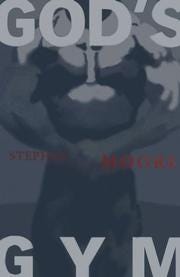
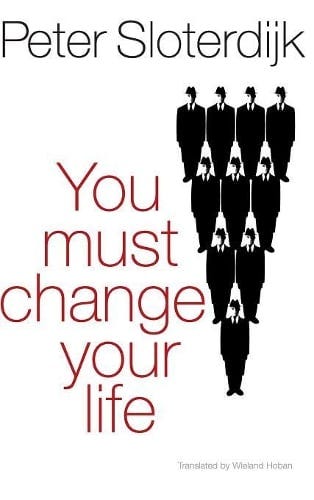
My first ever academic publication was a review of Stephen Moore’s 1996 book, God’s Gym: Divine Male Bodies of the Bible. This topic was a million miles away from my PhD project, but I was drawn to it, like a moth to a flame. Many years later, when reading Ben Spatz’s phenomenal book, What A Body Can Do (2015), I zeroed in on a brief reference he made to the work of philosopher Peter Sloterdijk (2013) – specifically his argument that religious practices are at root misrecognised ‘anthropotechnic’ exercises: basically, exercises. From that moment on, I hunted down publications by Sloterdijk and became a fan.
What do I love about Moore’s work? There is much. At first, I was thrilled by his subversive reading of the Judeo-Christian God from the perspective of and through the optic of the terms of 20th century ‘Western’ bodybuilding. But more enduringly, I think, it was the simple observation of the connection between Jesus’s crucifixion and the logic of the bodybuilding process: pain, torture, agony, death; the tomb; resurrection in greater glory. Workout, damage muscle fibres; rest; grow bigger and stronger.
What about Sloterdijk? Probably the cheeky revaluation of something that so many deem trivial, elevating it to the central place and conceptual pinnacle of both the definition of the human and the idea of progress itself: humans strive and repeat, strive and repeat, and that’s how progress is made. Exercise is the exemplary case of this.
Combining these two texts produces a new delight, and a new enigma: that of watching two entirely different registers of scholarly voice arrive, by completely different roads, at what is structurally the same kind of subversion – the same ‘joke’, even.
Gyms and Their Relation to the Religious Unconscious
I want to be careful with the word ‘joke’, though, because I don’t think either book is trying to be funny, and I don’t think the pleasure I take in them is the pleasure of humour. What I mean by ‘joke’ is closer to Freud’s sense of the term in Jokes and Their Relation to the Unconscious (1905) than to anything you’d find in a comedy club.
For Freud, the joke is not primarily mere entertainment; it is a technique – a specific bit of psychical machinery, built out of condensation and displacement, the same machinery that builds dreams. A joke takes two ideas that have no business being in the same sentence, forces them into an economical, condensed form, and in doing so smuggles past our internal censor a thought we would not otherwise be permitted to think, or say, or hear. The pleasure of the joke, on this account, is not the pleasure of the content itself – it’s the pleasure of the saving: the sudden, cheap, almost illicit efficiency with which a forbidden or repressed idea gets itself expressed. You laugh not because the thought is funny but because you got away with it. Something normally held back has, for a moment, been let through.
This is why I think ‘joke-structure’ is the right frame, rather than comedy. Freud’s whole point is that the joke is one of the very few forms in which an unwelcome insight is permitted to arrive before we are ready to think it properly. The tendentious joke goes where the treatise cannot yet go. It says the aggressive thing, the obscene thing, the blasphemous thing, in a form so condensed and so quick that it slips past the censorship that would otherwise block it outright – and only afterwards, once the pleasure of the joke has already done its work, can the thought be unpacked, argued for, defended in daylight. Insight, in other words, quite often arrives dressed as a joke before it is allowed to arrive dressed as an argument. That, I think, is exactly what is happening across these two books, and it’s why I don’t experience them as witty so much as uncanny.
There are more things in Heaven and Earth [that are bodybuilders]
Let’s look at what each of them is actually smuggling through. Moore’s condensation is architectural and anatomical: Gold’s Gym is the Herodian Temple, its purity codes and spatial hierarchies mapped feature for feature onto the Pentateuch; the crucified Christ is a competitive bodybuilder, “shredded” and “ripped” at his prejudging before Pilate; the Book of Revelation is a posing exhibition, God flexing eternally for an adoring celestial crowd. None of this is offered as a rhetorical flourish. It is offered as a serious argument, borrowed from Foucault, about how the spectacular torture of the cross gets internalised by Paul into a regime of self-surveillance – the believer learning to police their own body from the inside, the “docile body” of the disciplinary society, which is also, not incidentally, exactly what a training programme teaches you to do to yourself once nobody is standing over you with a whip or a spotter.
Sloterdijk’s condensation is more abstract but uncannily identical: the saint is the athlete; the monastery is the training camp; the whole history of religious asceticism is, under its metaphysical costume, a history of exercise – anthropotechnics, self-forming practice, the “planet of the practising.” Nietzsche gets crowned the “Schliemann of asceticisms” for excavating this.
Neither writer is telling a joke about religion. Each is using the joke’s own technique – forcing two unrelated domains into a single condensed image – to say something that could not, I suspect, be said any other way without sounding either absurd or blasphemous if stated flatly: that the sacred was never a separate category from the somatic. It was always the somatic, wearing a disguise that has simply, recently, fallen away.
That is the enigma I actually want to sit with, rather than resolve too quickly: why does this particular forbidden thought delight me so much, given how ambivalent I otherwise am about religion? I reject it outright, except when I am … scared. That ambivalence – the simultaneous dismissal and residual dread – is, I think, precisely what the joke-structure of these two books lets me hold in one hand instead of resolving. The joke doesn’t tell me religion is nothing; a purely deflationary account wouldn’t interest me half as much. It tells me that whatever religion was doing – producing awe, demanding discipline, promising a glorified body on the far side of unbearable pain – is still being done, in exactly the same shape, by an institution I walk into voluntarily three times a week and pay a monthly fee to enter. The censor that gets bypassed here isn’t really a religious one. It’s the one that insists my scepticism and my dread can’t both be telling the truth about the same object at once. Sloterdijk and Moore, arriving from opposite ends of the subject, keep independently building the same condensed, illicit image that lets me feel both at the same time. That, I think, is closer to what I mean by delight: not the pleasure of being amused, but the pleasure – sharp, a little uncanny, not fully resolved – of watching an insight arrive in the only form it was ever going to be allowed to arrive in.
Coda
When I was asked to review God’s Gym by a journal editor back in 1996, they knew my PhD topic was political theory. But they also knew that my MA essays the year before had been on such topics as bodybuilding, martial arts and satirical stand-up comedy. Have I ever really moved past these three sorts of concerns and approaches? My CV suggests not. I’m clearly still working some stuff out – albeit very slowly and very indirectly.

Comments
Post a Comment