The Wonky Body
Sense Management
While attending a conference in a different city, I visited a new gym. I found the squat rack. It was in a big alcove – a squat rack on each side wall and a mirror along the back wall, facing back into the gym. It was a heatwave, and I was relieved to feel very active air conditioning. However, in my alcove (for now it was mine, my space, my domain), I noticed a smell. I didn’t like it. I stepped out of the alcove and into the main gym area, and there was no smell. Step back in and it was there again. Plus, there was no real air movement there. I hypothesized that the air currents, the drafts, the circulation, was such that there was some kind of dead zone where it wasn’t reaching, and I was in it.
Smell, the wrong smell; to be fair, any perceived smell, is to my mind strictly verboten in a training environment. What we want and need are no sensory distractions. No strange smells, no irritating noises, nothing wobbling or loose, nothing damp or brittle. Strict almost laboratory conditions. Training, for me, is very much a matter of sensory management. The senses need to be ordered, structured. That’s why I could never have a gym in a garage – at least not a garage that is being used to house motor vehicles. My dad used to keep his weights in the garage. Both of my brothers do too. So, you go in and try to train, and it reeks of petrol, diesel, oil, rags, damp, dust, wood. And the lights are wrong. And so on.
Training involves strict sense management, which means environmental management. The environment needs to be on your side, helping; not making its presence felt, distracting, irritating.
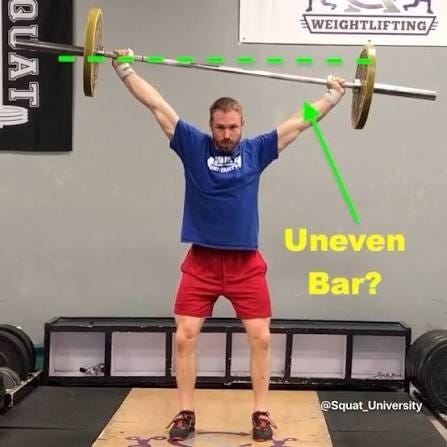
After a while, a man enters my alcove. Now it’s not fully mine anymore. He’s young, athletic, well muscled. He starts doing overhead barbell press at the other squat rack. As he is facing away from me, immediately I notice: he’s wonky. As he raises and lowers the bar, the bar is not horizontal; it drops to the left. The left arm doesn’t lock out fully. The left arm seems to be at a different angle to the right throughout the movement, even though his grip on the bar is equal. I think: if he had a mirror in front of him, maybe he’d see this and rectify it. I desperately want to go and tell him. But how can I? I don’t know him. So I quietly blame the mirror positioning and try to forget, try to manage my own mind, try not to let my observation intrude any further into my workout.
Bad Habits
Scholars of the body such as Richard Shusterman, Drew Leder and Sander L. Gilman draw on long traditions of reflections on embodiment to draw our attention to the ways that our environments and our actions are almost inexorably going to make our bodies wonky. We’re right-handed, right-footed; we use tools and carry out actions on one side only; we develop preferences (this hand for holding things, this hand for working on them; this hand for tool use, that hand for stability; and so on). We sleep in preferred positions, sit in asymmetrical postures. As hypertrophy and atrophy, plasticity and shrinkage all take root and grow over time, we are going to become wonky.
Gyms are meant to correct that. Literally. Since the birth of the modern Western gym, a large part of the point of gymnastic, calisthenic and later aesthetic training has been focused on ironing out and preventing wonkiness. This is perhaps why it is so visible and so … upsetting? Disconcerting? Uncanny?... to see in a gym: the last thing you want a beautifully symmetrical movement like overhead barbell press to do is consolidate wonkiness.
The Vanishing Body
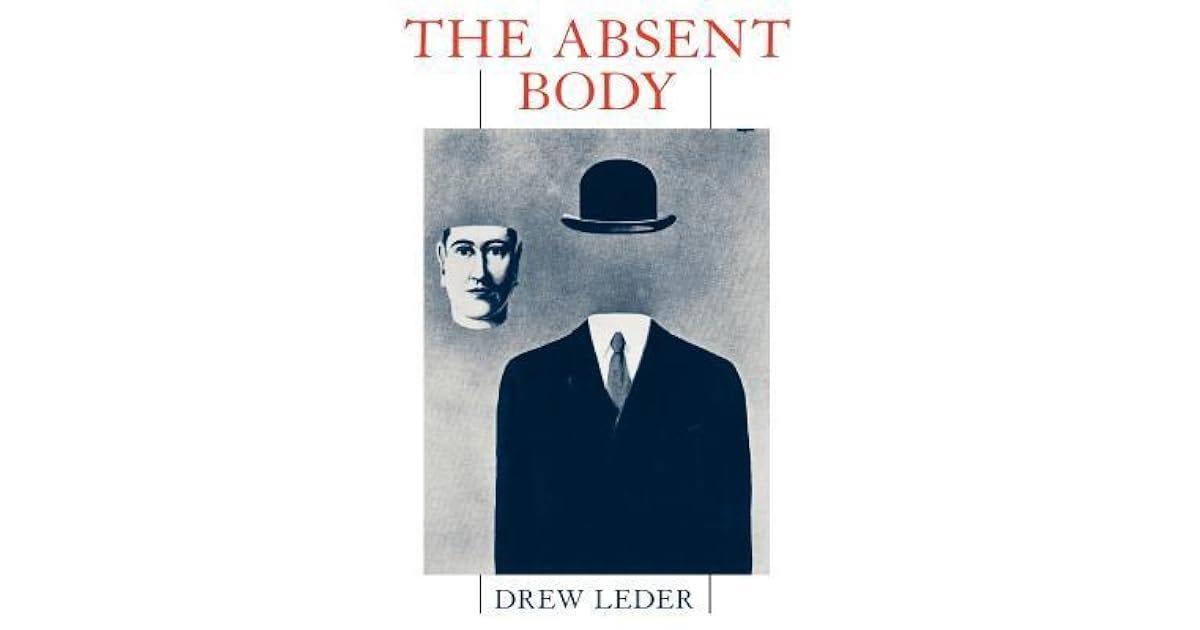
In his phenomenological study of body awareness, The Absent Body (1990), Drew Leder argues that it is one of our body’s most significant features that it constantly withdraws from our consciousness, so that we can focus on other things. We could not function if we were aware even of more than a couple of the many uncountable things our bodies are doing all the time. So, the body tends to recede, he argues. This is why Cartesian mind/body dualisms seemed so plausible to so many for so long: our body’s job is to move into the background while we think and decide and work out and do. It is not meant to be there, going ‘hey, can you feel that? I’m digesting that food!’ or ‘Whoa, it’s actually really, really hard to stand up and hold balance while looking up at that cobweb in the corner, you know? Hey, a bit of help here?’
In relation to this, Richard Shusterman’s argument about ‘somaesthetics’ – as the becoming aware of the feel of certain kinds of movements and postures – is an argument about corrective benefits of different kinds of exercise; the deliberate process of trying to remove wonkiness and instead exploring the sensory, perceptual and experiential value of different kinds of bodily awareness – cultivating good body habits to try to iron out the effects of bad ones.
In Drew Leder’s terms, my wonky guy – and surely, to greater and lesser degrees, all of us, all the time – displayed to me a habitual asymmetry sedimented so deeply into the body’s unreflective functioning that it had, quite literally, disappeared from his awareness. For Leder this happens – this has to happen – all the time.
However, it strikes me that in the practices of working out in a gym – not playing sport, not doing our jobs – in ‘intransitive’ things like bodybuilding, physical culture, yoga – somaesthetic practices that are focused not on an external task but on the body itself – there is a strong pushback against the kind of ‘vanishing’ or ‘becoming absent’ that Leder describes.
Leder’s phenomenology of absence describes the ordinary, healthy body – the body of perception and instrumental action, the body that recedes so that the world can appear. Bodybuilding is not that. Bodybuilding is a disciplined, repeated, voluntary refusal of bodily disappearance. The bodybuilder is engaged in an ongoing project of bodily presencing.
Body Presencing
This runs in the opposite direction to everyday life, in Leder’s perspective. Indeed, Leder’s central claim is that the body is essentially self-concealing. We perceive from our eyes, not to them; we act from our hands, not upon them as objects of contemplation; the whole apparatus of embodied engagement with the world depends on the receding of the body as tool, becoming a transparent medium through which intention flows toward its target.
‘Health’, for Leder, is more or less coextensive with this vanishing act. ‘Well-being’, he writes, is ‘in general, synonymous with my noticing nothing about my body’. In health, the body dis-appears. However, in injury or decline, he argues, the body dys-appears. Dys-appearance is the body’s unwanted and troublesome re-emergence into awareness. Dys-appearance, for Leder, happens when something goes wrong: pain, dysfunction, disease, injury. The body shows itself when it has become an obstacle.
Bodybuilding inverts this logic so completely that it is worth pausing over how strange the activity actually is, phenomenologically speaking, once you strip away its cultural familiarity. The bodybuilder in the gym is not principally oriented toward a Heideggerian external ‘towards-which’, in the way that the tennis player is oriented toward the ball, or the hiker toward the summit. There is a goal-object, certainly – the bar, the plates, the rep count, the transformation. But this object is instrumentalized in a peculiar, almost inverted way. The weight is not what one is trying to move for its own sake; the weight is the means by which one produces a sensation in a specific, named body part. The bodybuilder curls the dumbbell not to relocate it in space but to make the bicep ‘feel it’. The entire apparatus of resistance training – the choice of angle, grip, tempo, range of motion – is calibrated not toward efficient goal-attainment (in which case one would simply use the most mechanically advantageous form) but toward maximizing elements like ‘time under tension’ and sensory intensity in a targeted region. This is a technology, in the fullest sense, for manufacturing localized dys-appearance on demand.
Leder does gesture toward something like this possibility. He acknowledges that not all pain is aversive in the way that illness is. There exist, he notes, ‘certain pains, such as that of the athlete pressing against limits, that are congruent with life projects and have a positive significance’. The phrase ‘no pain, no gain’ appears in his text, but almost in passing, as an exception to the rule that dys-appearance signals threat. But Leder does not linger here, because his larger argument is aimed elsewhere – toward showing how the involuntary dys-appearance of illness and death feeds into Cartesian dualism’s devaluation of the body. The athlete’s pain is, for him, a minor counter-case, a complication noted and set aside. I want to dwell in that complication, because I think it names something that is not marginal to embodied life but central to an entire modern practice of body-relation: what we might call presencing-as-technique.
I Ache Therefore I Am
Consider what actually happens across a training session. A muscle group is worked until it ‘burns’ – until lactate accumulation and mechanical tension produce a localized, escalating discomfort that the lifter does not flee from but courts, extends, chases toward ‘failure’. This is dys-appearance sought rather than suffered. And crucially, this pursuit does not stop at the gym door. The bodybuilder wants, and cultivates, the lingering ache – delayed-onset soreness that persists for a day or two afterward, transforming ordinary movements (sitting down, reaching for a cup, climbing stairs) into small, repeated occasions on which the trained body part re-announces itself. This soreness is not incidental; it is, in the folk-phenomenology of gym culture, evidence. ‘I felt it for days’ is a satisfaction report, not a complaint. The ache becomes a kind of proprioceptive signature, verifying that yesterday’s session actually did something, that the muscle was sufficiently disturbed to require repair, and – this is the key inversion – that the body part in question has been successfully dragged back into presence and, ideally, held there.
This reframes Leder’s account of incorporation and habituation in an interesting way. Leder describes skill acquisition as a movement from explicit thematization toward tacit absorption: the novice swimmer consciously monitors arm position and breathing, but the practiced swimmer’s body ‘knows how’ without knowing how it knows, the skill having sedimented into an unreflective ‘I can’. Bodybuilding takes the opposite trajectory with respect to feeling, even as it deepens motor competence. The lifter’s technical execution of a movement does become tacit and automatic over months and years – the mechanics of a bench press eventually require little conscious monitoring. But the sensory relationship to the muscle is not allowed to settle into this same silence.
Quite the opposite: bodybuilders speak often of the ‘mind-muscle connection’, of relearning to ‘feel’ a lift they have technically mastered for years, of switching exercises specifically because a familiar movement has become too automatic, too efficient, and has therefore stopped producing the desired ache. Leder writes that ‘we forget or devalue’ bodily change through habituation. However, the bodybuilder’s entire practice is an engineered resistance to exactly this forgetting. When a body part stops being felt, it is retrained – not primarily to preserve strength or size but to restore its thematic presence, to bring it back from the background disappearance into which even trained muscle inevitably threatens to recede.
The Epistemology of the Alcove
This is where wonkiness enters – not as an aberration of the practice but as its structurally predictable element. If presence is manufactured locally, muscle by muscle, session by session, then it will almost never be manufactured evenly. The overhead press requires bilateral symmetry as a mechanical precondition of the movement’s proper execution, but the bodybuilder’s felt relationship to left shoulder and right shoulder has, in all likelihood, never been symmetrical, because feeling is not distributed by mechanical necessity but by attentional history – by which limb was favoured in childhood, which side was injured and therefore protected, which arm the mirror faces more readily, which side receives the lifter’s dominant-hand instinct to ‘help’ during a plateau.
Leder’s own account of the corporeal field is useful here, turned against his emphasis on disappearance: the body is not one undifferentiated surface of possible presence but ‘a highly complex phenomenon composed of different functional elements’, in which ‘there may be, and often is, more than one prominent focus from which we act’. Bodybuilding does not overcome this unevenness; it inscribes it, session after session, into asymmetrical muscular development, asymmetrical proprioceptive acuity, asymmetrical capacity to voluntarily recruit a given muscle under load. The very technique that presences the body also, and by the same mechanism, differentiates it – produces a body that is intensely, unevenly felt, and therefore a body whose symmetrical, ‘should-be-balanced’ movements will tend, quietly and without confession, toward the wonky.
Given its desire to eradicate wonkiness and to replace that instead with an impossible fantasy of absolute left-right symmetry, bodybuilding has often been deemed ‘normative’. It works in the service of fantasies about ideal masculinity, they say. And arguably, for men – some men, some of the time – it does. Women – not so much. Nonetheless, its desire (my desire?) to eradicate wonkiness can easily be read as a desire to eradicate queerness – especially when ‘queer’ is understood in its etymological sense of a twist, torque, bend or mutation of the straight, the equal, the symmetrical. But, given the inevitability of the queer, of queering, bodybuilding’s own fixations might equally be read as the ultimate queer desire, and queering practice.

Comments
Post a Comment