The Joy of Flex
Four Books of 2025
In 2025, I started reading novels, autobiographies and other narrative non-fiction focused on strength training and bodybuilding. At least four of the books I read were 2025 publications, two by men and two by women. I always intended to write something about them, but never quite got around to it.
What struck me about the 2025 publications was that I found the ones written by men to be awful, grim, bleak and miserable; and the ones written by women to be upbeat, optimistic, uplifting, and delightful. Joyful.
Two 2025 works by men that stood out for me – not because they were good, oh no – were Jordan Castro’s Muscle Man and Sebastian Castillo’s Fresh, Green Life. Castro’s Muscle Man is a relentlessly irritating and objectively bad piece of ‘fiction’ (some of it was extracted and passed off in Harper’s Magazine not as fiction but as an autobiographical account of one of Castro’s own workouts). Fresh, Green Life by Sebastian Castillo is a far better piece of writing, written by someone who can actually imagine a character and craft a paragraph; but it offers an equally depressing take on men’s relationship with themselves and the world as expressed through the prism of weightlifting.
Reviewers have connected the grim features of recent male literary writing on lifting and bodybuilding with the contemporary tragicomedy known as the manosphere. I prefer the term ‘the manscape’, but it has yet to catch on.
Being a man in the time of the manosphere, it seems, requires everything by men and about men to be bleak and idiotic. Thank you, manosphere, for this particular aspect of your manscaping.
Meanwhile, and by happy contrast, women’s writing on similar themes in 2025 felt like a breath of fresh air. Two books stood out for me. One was A Physical Education: How I Escaped Diet Culture and Gained the Power of Lifting, by Casey Johnston. The other was On Muscle: The Stuff That Moves Us and Why It Matters by Bonnie Tsui.
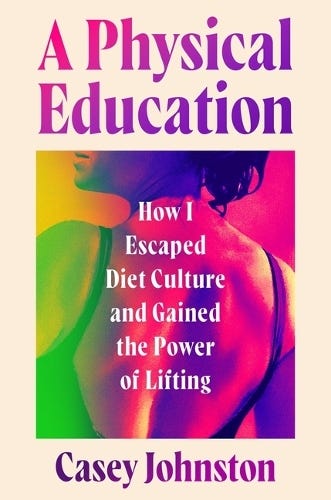
These works are a joy to read. This is surely connected with the fact that they focus on the delights of lifting, and the effects that gaining strength and bodily confidence via lifting can have. ‘Before lifting, I had not once thought of myself, my body, as a mutable, habitable living thing’, writes Johnston: ‘I had not even really thought of myself as my body. It was as if it had been a separate, unruly alien entity that I had to wrangle into submission, putting it through one obstacle course after another, wanting it to earn my approval, only to find it always falling short’.
Johnston’s story is about the escape from the diet culture that says women should be vanishingly small and the relentless aerobic and cardio ideologies involved. In escaping this, Johnston focuses on the psychologically, culturally and politically emancipatory dimensions of strength training: women’s ‘bodies are already maniacally scrutinized and controlled. Enforcing the importance of diet and weight loss literally keeps everyone, especially women, in a weakened state. Therefore, actually gaining strength is a stacked threat. Strong women reflect a double rejection of the status quo – they’re not just strong, but they are the gender who “shouldn’t” be strong’.
She also notes that, if culture has for a long time said that women ‘shouldn’t’ be strong – or can’t be strong, or aren’t strong – it has also tried to impose similar strictures on men. Writing about the case of the middle-class writer Daniel Duane’s family’s distaste for his interest in bodybuilding, Johnston notes the culturally reiterated codes for different classes of body: ‘It’s why writer Daniel Duane’s family felt uncomfortable with his new size and shape – their cultural programming alerted them that he was behaving outside of his class..’.. Middle-class people ‘should’ engage in activities that make them lean and lithe, not working class bulky.
But, for Johnston, the key theme is the discovery of mute delight, inexpressible joy, growing self-love:
Inevitably, one question would always come up: What was it about lifting that I loved so much? I would say something along the lines of ‘It completely changed how I think and feel about the world and myself and everything’. I knew that was true, but I didn’t know exactly what I meant, and I didn’t have the words to put it in more specific terms. This book became about finding those words.
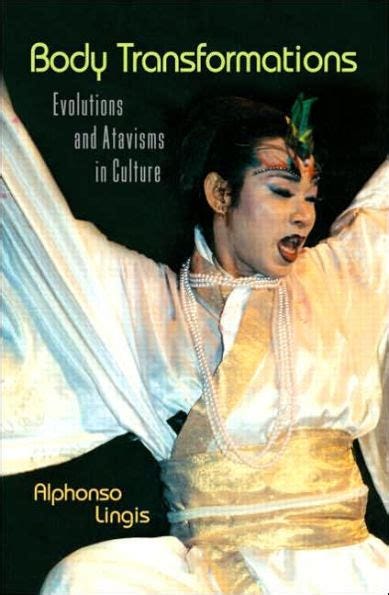
In Body Transformations, philosopher Alphonso Lingis reflects on the situation of women who find athleticism and strength training. He writes: ‘Throwing a punch, a kick in the air, a sudden impulse that hurls her body against her pal standing there in the park, she felt hot bursts of muscled pleasure. She gets intrigued with the energy packed in muscles and with the substance of muscles. In the gym, she feels them swell and harden at grips with iron weights on steel bars’. Lingis continues:
Sociologists might try to explain her fascination with musculature by the addictive force of cultural images – the aesthetic glory that artists since the age of Pericles have spread over titanic bodies or the political power, the leadership, that sculptors have depicted in bronze statues of muscular males. The truth is that her addiction to musculature has its source in her body. Although resentment at being pushed around by images of male toughness and fear of being physically attacked and overpowered may make her despise her weakness, the addiction to the gym and muscles comes out of pleasure.
In other words, yes there is ‘culture and all that’; but one must never overlook the fact that there is joy born in lifting. In Johnston’s words:
As I returned to the gym again and again, my body a little more awake each time, I began to understand what was meant by trying to assess how each rep and each set and each movement ‘felt’. With every new session, as I concentrated on the limbs and parts moving the weight, willing them to move, I could feel them speaking back to me.
I started to develop a new wordless, physical vocabulary for all the new sensations and experiences I was having, cataloguing them like exotic birds in a jungle – too heavy and too light, but also the good versus better positioning of this limb to that one or relative to my torso, feet planted here versus there, weight held close versus too far away from myself.
The logic of weight training is different from many other approaches to women’s exercise and physical culture, she observes:
I was eating and I was working out and I was resting, and all of these health-related tasks had made a near-immediate transition for me, from pits of despair to mountains of delight. Previously, all of my physical life had revolved around the dynamic of working and punishing myself for eventual rewards. But the way I went about it kept me doing more and more and more work for a reward that never came, only more punishment in its place. In lifting, the dynamic was reward, reward, reward: eat and rest to gear up for a gym session, have an amazing gym session because I ate and rested, go home to eat and rest to maximize the gym session, repeat and repeat and repeat.
A Physical Education: How I Escaped Diet Culture and Gained the Power of Lifting by Casey Johnston is a magnificent book.
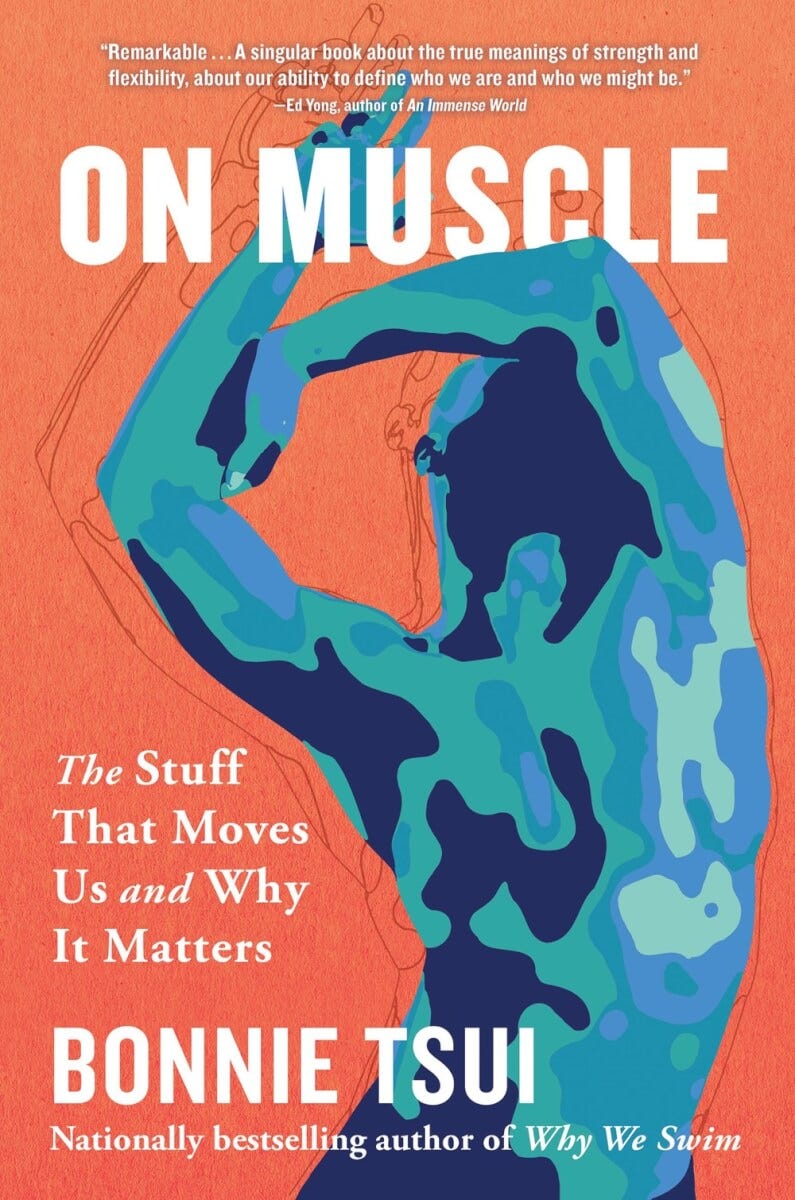
Then there is Bonnie Tsui’s On Muscle: The Stuff that Moves us and Why it Matters. Unlike Johnston, Tsui doesn’t come from an environment that coaxed or coerced women and girls to accept the idea that they were weak. Rather, Tsui reflects on her father’s overwhelming enthusiasm for exercise and martial arts, that propelled her forward in similar worlds.
Her father, Tsui tells us, has been ‘preoccupied with outrunning death’ ever since a brush with mortality, and he enlisted his daughter into his project. She recalls the childhood ritual of being asked to ‘make a muscle’, and how, as the baby fat fell away, ‘instead of feeling funny, I felt fearless’. Making a muscle, she suggests, is a way of asserting presence: ‘We are here – conscious, corporeal, alive’.
From this personal starting point, Tsui’s work widens out into something much more ambitious. On Muscle involves an extended argument against the old opposition between brawn and brain. ‘We often think about muscle as existing separately from intellect – and maybe even oppositional to it’, she writes, when in fact brain and muscle are ‘in constant conversation with each other’. Discussing the neuroscientist Daniel Wolpert, she goes further: ‘What if I told you that the mind exists only to move the body?’ Brains matter, on this view, only because they let us move, interact and exert ourselves on the world, which leads Tsui to an ‘affective’ redefinition: ‘Exerting our influence on the world: That’s the modern-day definition of a flex’. She also enlists Charles Sherrington’s 1924 Oxford lecture, which declared that moving things is ‘all that mankind can do’, and that whether ‘whispering a syllable or felling a forest’, the sole executant is a muscle.
One thing that makes the book such a pleasure is that it keeps returning to pleasure itself. Tsui tells the story of Jan Todd, a pioneering figure in women’s weightlifting. Todd recalls her first serious lift as ‘a different feeling, a powerful feeling’. What strikes Tsui as groundbreaking about the magazine coverage Todd later received is that it showed a woman talking openly about how good it felt to be strong: ‘I love the way it makes me feel’. This is precisely the ‘muscled pleasure’ that Lingis insists on, and the ‘reward, reward, reward’ that Johnston discovers. Tsui adds research on lifting and recovery from trauma: visibly growing stronger can reframe how you see yourself, so that ‘You can see yourself as a person with agency’. Strength, for her, is never a settled fact: ‘To know one’s own strength’ is not an ‘I do’ or ‘I don’t’ but ‘an ongoing process of discovery’.
The contrast with the men’s books I read last year is stark. Tsui herself supplies a glimpse of the darker male tradition. She quotes a bodybuilding memoirist who admits his motive was that he was ‘timid, diffident, insecure, submissive’, and that muscles stood in for the character he wished he had. Tsui doesn’t dwell there. Her muscles are not compensations but capacities: ‘muscles are open to possibility’.
She is also alert to how culturally contingent our muscular imagination is. She is startled to learn that muscles did not figure in traditional Chinese medical maps of the body, and cites Shigehisa Kuriyama’s observation that Chinese doctors lacked even a specific word for ‘muscle’. She is good on the symbolic freight of particular muscles too, drawing on the fashion critic Vanessa Friedman’s remark that ‘few body parts’ are as ‘freighted with symbolism as the shoulder’. Shoulders, Tsui notes, ‘are more than a coat-hanger frame’.
Above all, Tsui wants us to see muscle as intelligent. ‘Muscles are smarter than we think’, she writes. ‘They have different personalities. They remember things’. Exercise releases what Kelly McGonigal calls ‘a pharmacy in your muscles’, and Tsui cannot resist the exclamation mark: ‘Bulking up muscles literally bulks up your brain!’ She also reports Sian Beilock’s research showing that moving your foot and understanding the word ‘kick’ involve similar areas of the motor cortex, and the novelist Tommy Orange’s confession that ‘Solutions come while running, from a part I don’t access otherwise’.
In her research, Tsui bumps into the idea that emotion, too, turns out to be muscular. Darwin noted that the body can itself be a path to joy: kids and puppies romp because ‘the mere exertion of the muscles after long rest or confinement is itself a pleasure’. The psychologist Dacher Keltner tells Tsui that some emotions are ‘more about the body’. Joy involves jumping, love involves embracing, and ‘Emotions are about action’. Batja Mesquita describes emotions as ‘relational acts between people’ rather than private mental states. Tsui’s refrain is simple, yet McLuhanian: ‘The movement is the message’.
There is real playfulness here. Tsui delights in the photographer Philippe Halsman’s mock-Freudian ‘Interpretation of Jumps’, in which a man jumping with legs apart is interpreted as trying to project importance, while a woman doing the same signals ‘passion, independence, and rebellion’. And she asks, reasonably, why play, ‘the essential pleasure of feeling at home in your body’, should be abandoned just because we have grown up. Of dance, she quotes a dancer for whom the body ‘is not just the vessel for my self-expression, it is the expression itself’. He didn’t just dance, Tsui observes; ‘he was the dancing’. Nietzsche redux.
None of this is naive about vulnerability. Tsui knows that we lose bodily capacity through ‘age, injury, illness, trauma’, which she calls ‘the violent condition of being alive’. She writes movingly about the surge in anti-Asian violence in America, about friends recommending pepper spray, and about her mother’s advice to ‘Keep your back to the wall’. Here Tsui’s book brushes against the fear of being ‘attacked and overpowered’ that Lingis mentions, and against Johnston’s politics of strength. Yet even here the emphasis falls on capacity rather than dread. ‘Why do we like muscle?’ one of her interviewees asks. ‘Muscle is the ability to change’. It is, Tsui stresses, one of the very few tissues that adapts every day. Physical work, she concludes, is ‘a critical and literal part of pushing back against loss’.
Both Tsui and Johnston agree: it requires discovery to learn for oneself that bodily effort can feel good, and mean something. ‘Muscles move us toward happiness’, Tsui writes. The ache after exertion is not a punishment but a sign: the ‘tiredness in my muscles tells me that I’ve done something worthwhile’, the residual burn a symptom of what it means ‘to really live a life of the body’.
If the men’s books of 2025 read like dispatches from the manscape, On Muscle reads like an invitation back into the body; curious, generous and, above all, joyful – a deep, personal, often profoundly incommunicable joy, beyond words; a kind of eros from the depths; what Lingis calls the transubstantiation of ‘becoming-steel’ or ‘becoming-iron’ that is also a lust for life.
Coda
As a coda, I only belatedly note the fact that both of these books have cover images focusing on women’s well-muscled backs. This feels poetic and deeply appropriate, in more ways than I can go into here. Another time, perhaps.
Comments
Post a Comment