Speculative Feeli
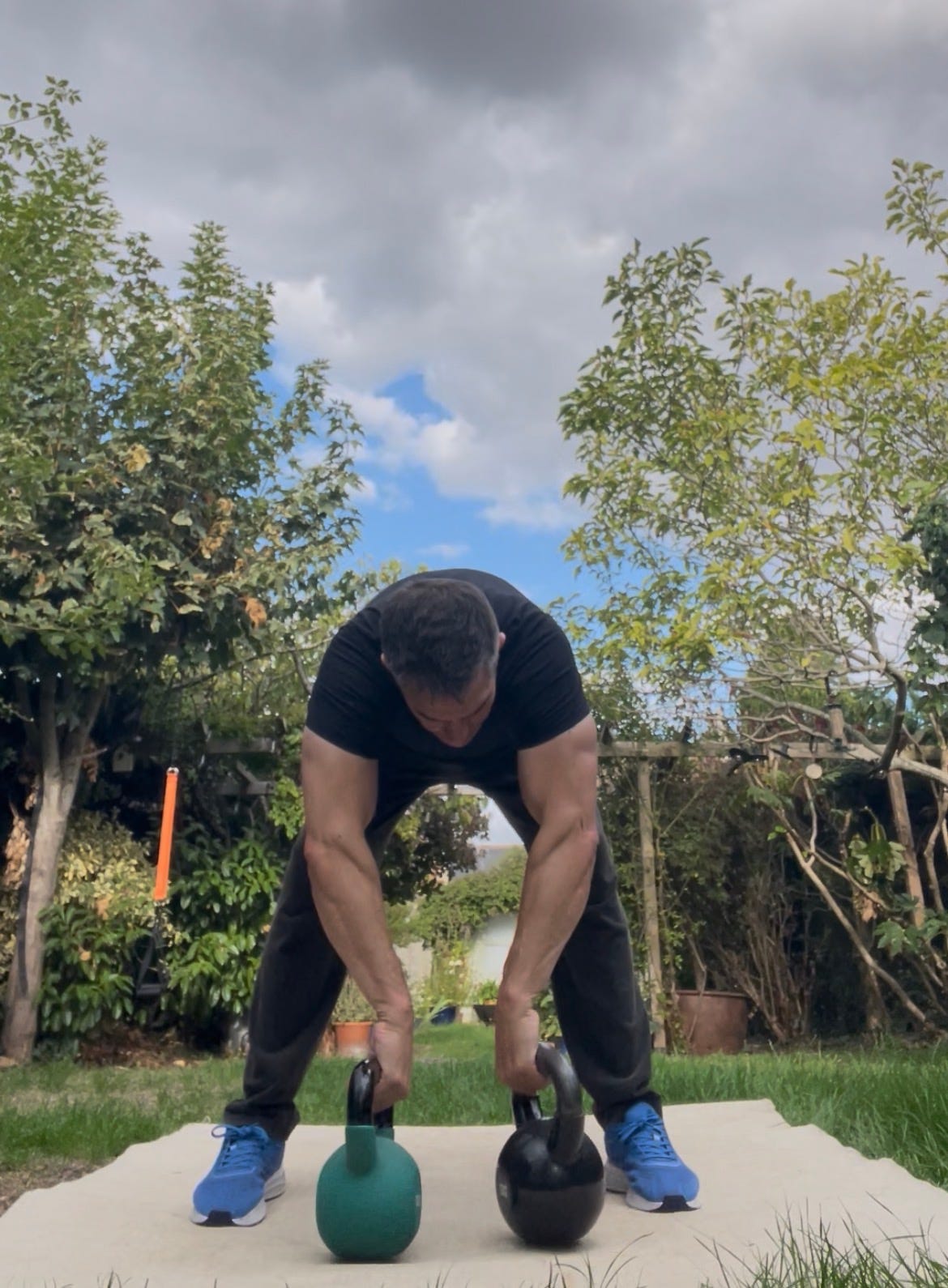
Some tenets. Ontology is not emotionless. A talisman need not be an amulet. One thing definitely more tedious than Kant is a critique of Kant. Speculative realism is not particularly speculative and has nothing to do with realism. Object oriented ontology doesn’t seem to give a fuck about objects.
If I ever feel the need to say the word ontology to students (I try to avoid it), I quickly calm their panic by saying: don’t worry, you already know what it is – it means (the study of) stuff that exists, like palaeontology means the study of old stuff, like rocks and fossils (that exist). And then we can move on, to talk about something that actually exists, or impacts on us as if it exists, rather than getting hung up on ‘the study of’ bit.
In the work of Alphonso Lingis, the elemental exists, and it takes many forms, such as different kinds of light, warmth, ground, the sea. The levels we sink into or bounce off aren’t representations. They hold us before we stand apart as subjects. In affect theory, this kind of thing is often called, for shorthand, a pre-personal intensity.
But then there are objects. In his discussion of the history and cultural place of fetish objects, Lingis observes that you don’t just have a fetish, it has you. We might say the same of many kinds of objects, and their relations, always in relations.
In Cronenberg’s film M. Butterfly, René Gallimard repeatedly says to Song Liling, ‘You are my butterfly’. This doesn’t really mean anything. It cannot really be specified further or more clearly in ‘object oriented’ or referential language. Rather, it must be translated into a psychoanalytic register in order to make any sense. Gallimard’s butterfly thing is not simply sexual, not simply projection, but actually constitutive of his entire identity, his entire psychic and psychological fabric.
Earlier this year, when I was lecturing about this film for undergrads on my East Meets West module, I heard myself say something like ‘So, Gallimard says butterfly, but we’d each say something different: I wouldn’t say “you are my butterfly”, I’d probably say something like “you are my”…’ I paused for a moment, trying to think of an example; before hazarding, speculatively, ‘kettlebell!’
No one laughed. But, hey, they don’t know me. But I do, and I laughed. So then some of them did, because the lecturer was laughing and emotions are contagious, even without comprehension.
But I do love my kettlebells, beyond words, outside of words. ‘You are my kettlebell’ could work.
In a reflection on what Lingis says about fetish objects and talismans, Gabriela Méndez Cota confides that she sometimes feels that her amulet helps her train. She imagines it as a hand on her chest pushing her back up from the bottom of a squat. My kettlebells don’t help me like this. My kettlebell is my muse. It’s just an object: a lump of steel. Some have neoprene around them. But I use the kettlebell to think about ontology, about affect, about identity. My kettlebell is my little other object, my little piece of the real. The real is that which resists, that which has no obligation to fit into systems and models and paradigms. And my kettlebell doesn’t.
When I was more of a martial artist, my muse used to be a stick. A staff. A length of wood. A little real object. A long real object. The staff is the most basic piece of ‘technology’, the most basic ‘supplement’ to the human you could want; something you could put into so many different relations – ontological, if you like, epistemological if you want. War machine, weapon, tool, toy, trinket, talisman, whatever. But for me, it was the base level image for thinking things like ‘the’ human, affect, enskillment, technology, habitus, anthropotechnics, somaesthetics, art, discourse, cultural exchange, heritage – you name it – pretty much anything. Everything is in everything said Jacotot/Rancière. I say nowhere more so than in my stick, my kettlebell.
Today, because my life is different, my staff has been all but replaced by my kettlebell – though I still have my staffs. Never say never. These are what I think about when I think about ontology. My kettlebell helps me to avoid thinking solely in terms of easy and obvious binaries, hierarchies, semiotics. I think about the feel of its shape, its weight, its sensuousness, my passion for it, what it can do for me. I think about why it is beautiful to me. About its magical transformational qualities. The imperatives it contains, imperatives that need to be worked out.
To work things out, you need to handle the things; feel its qualities; try to work out what they mean or entail; experience their effects on you, your effects on them; how they change you; how you change them.
My friend Daniel Mroz frequently hits me with wise words and insights. One of his – a distillation of massive amounts of experience in cross-cultural research in embodied practices – is that you can read all the cross-cultural books in the library and learn less than taking one trip and doing something new. Readers make massive mistakes. Western theological readers of world ‘religious’ [ahem] texts [religion being a pretty damn Western notion] often inadvertently translate them all into the idea that all religions give ‘partial insight’, or that there are many different paths to take us to the top of the mountain. But this is irredeemably Christian Universalism.
Words are tricksters, pranksters, conjurers. Another one of my favourite observations made by Daniel relates to the way in which western notions of qi (‘chi’) derive from a persistent mistranslation of what was in fact many different Chinese words, used across Chinese martial and medical texts, all being wrenched into the Theosophically-saturated word ‘energy’.
Energy feels pretty good. But it’s a mistranslation, a misconstrual. It misses a lot. One needs to look closer. Into the grain, into the weeds. Somewhere along the way, speculative realism and OOO lost their possible sensual dimensions. Speculative feelism could reclaim the sensual dimension(s). A formal theory of objects is, to me, meh, until we give them back the heat they have in, say, the work of Lingis.
In Lingis’s book, The Imperative, things themselves pose challenges. The fragile vase asks to be handled gently, the storm says take shelter. This is a realism of solicitation, of challenge. Speculative feelism regards the ‘great outdoors’ as always encountered through exposure, vulnerability and passion, not through cognition. But I keep my kettlebells indoors, under cover. I do so because I care about them, neither with optimism nor pessimism, expecting neither cruelty or care, but simply because I feel it.

Comments
Post a Comment